Trace
A MEMORIAL

Trace
MEMORIAL TO THE ‘ESSENTIAL WORKERS’ LOST TO THE COVID-19 PANDEMIC.
“What you encounter first is their absence”
The one hundred named here were lost in the early months of 2020.
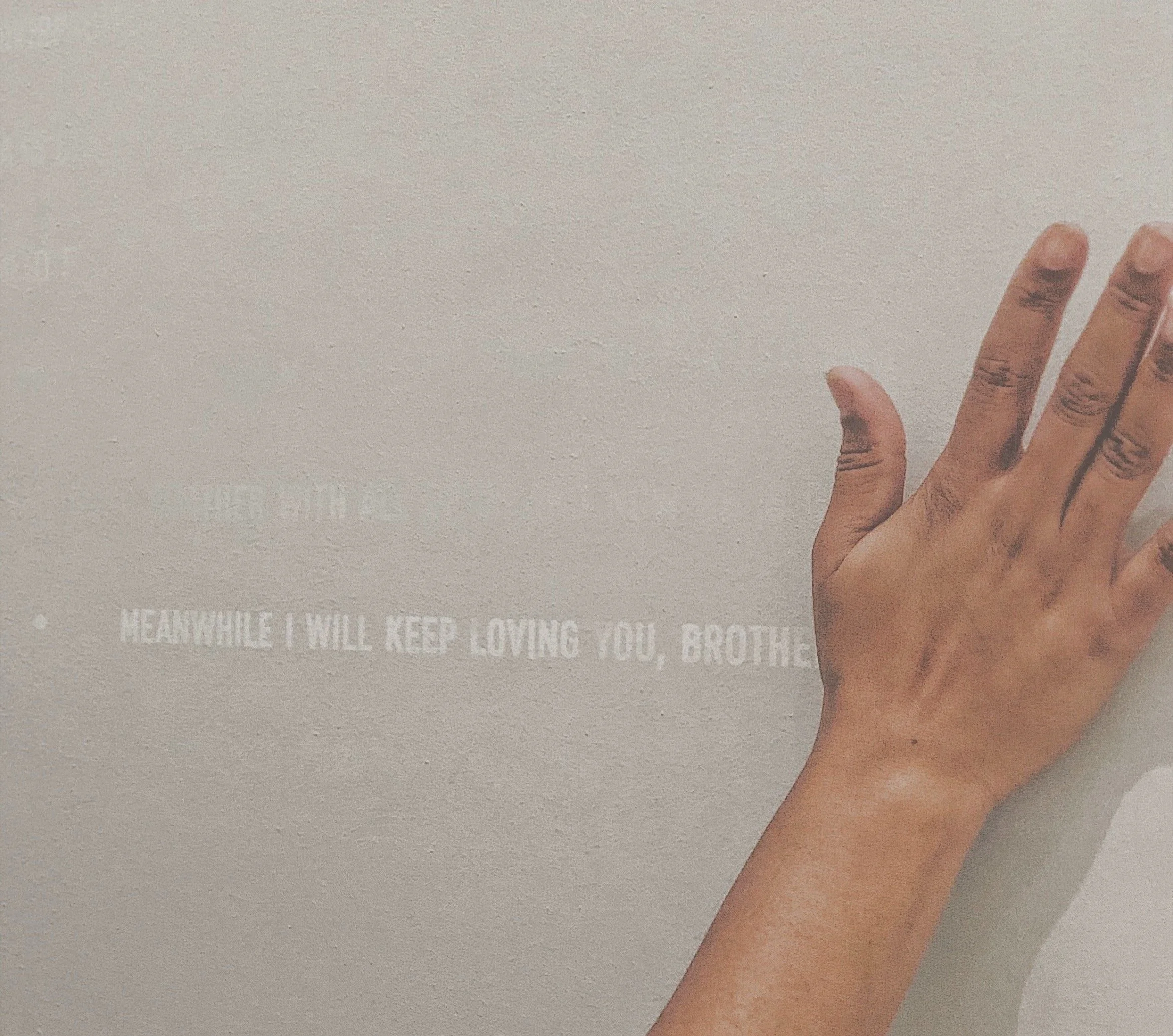
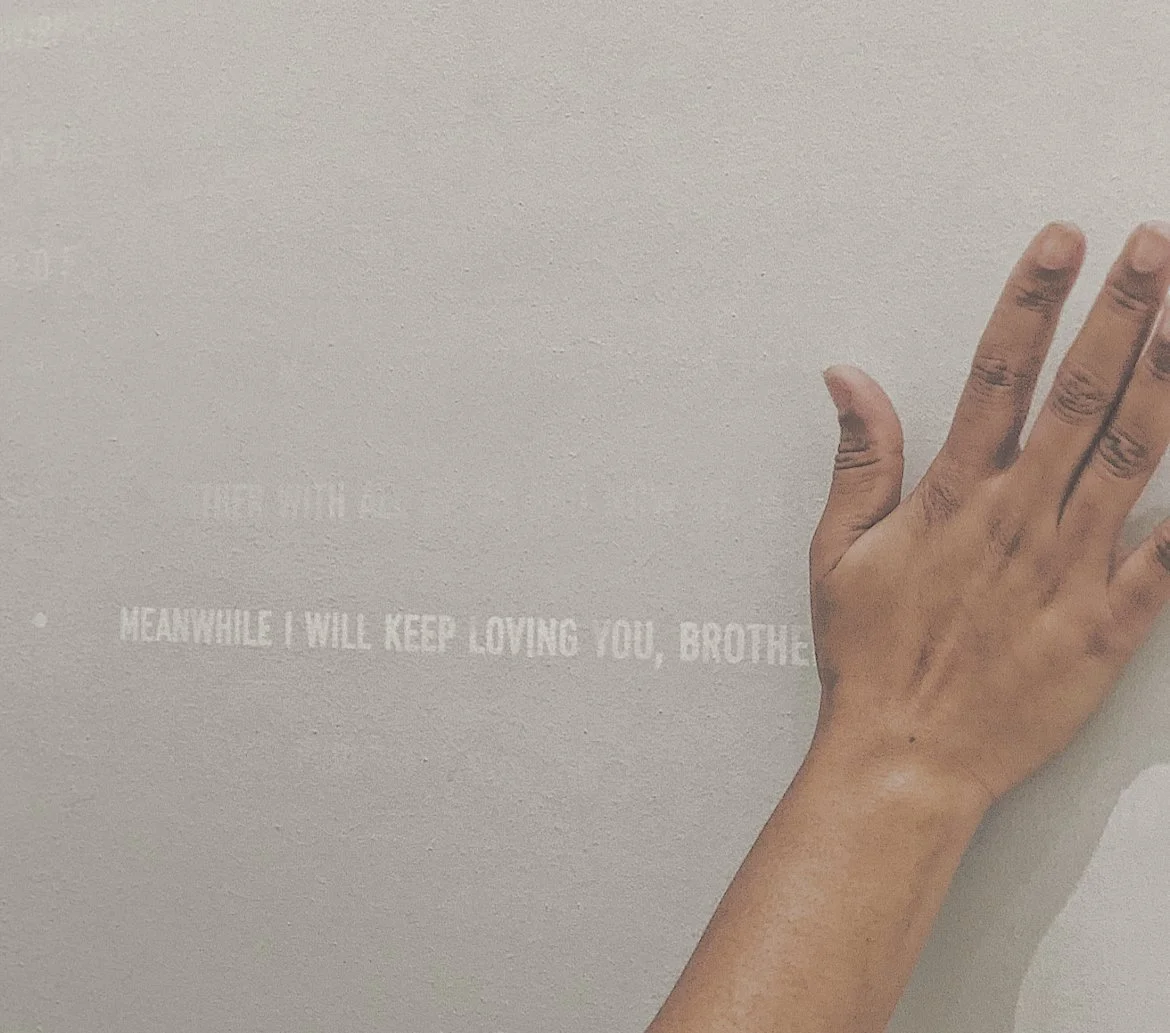
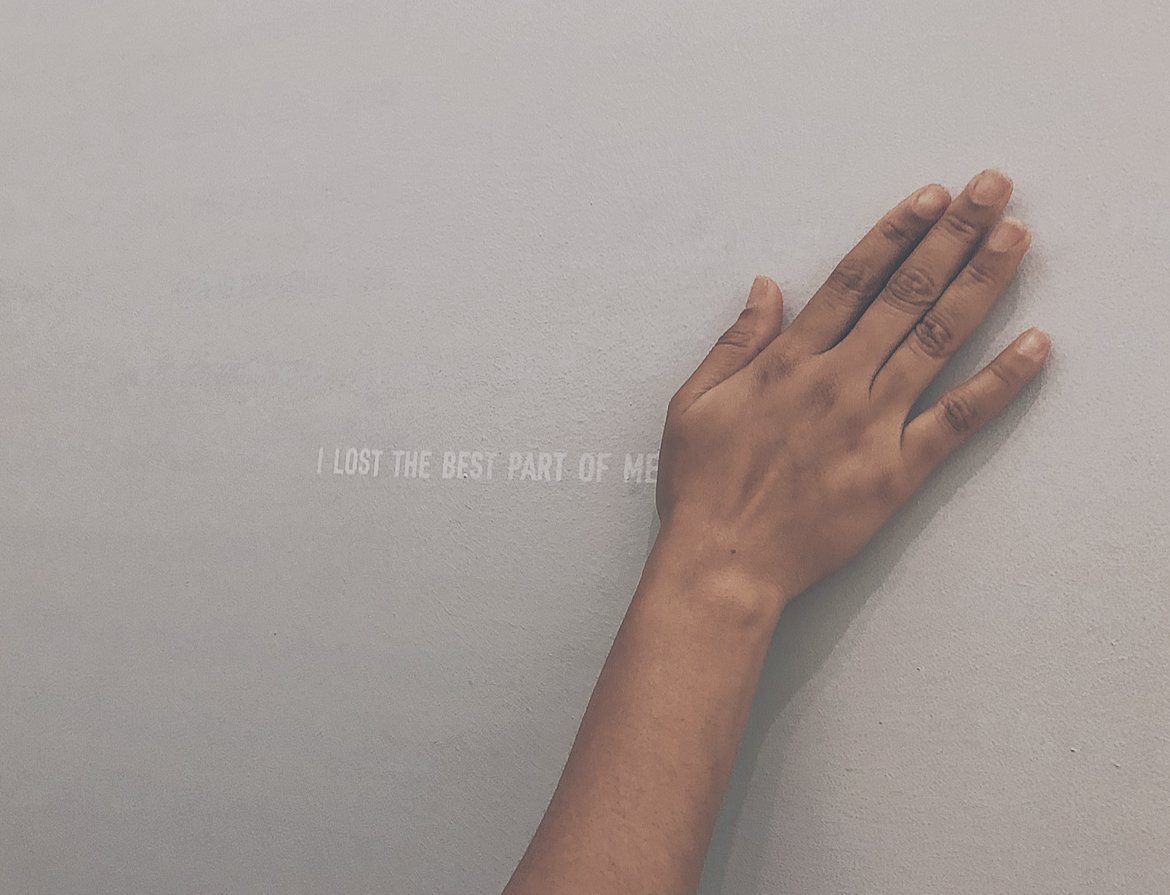
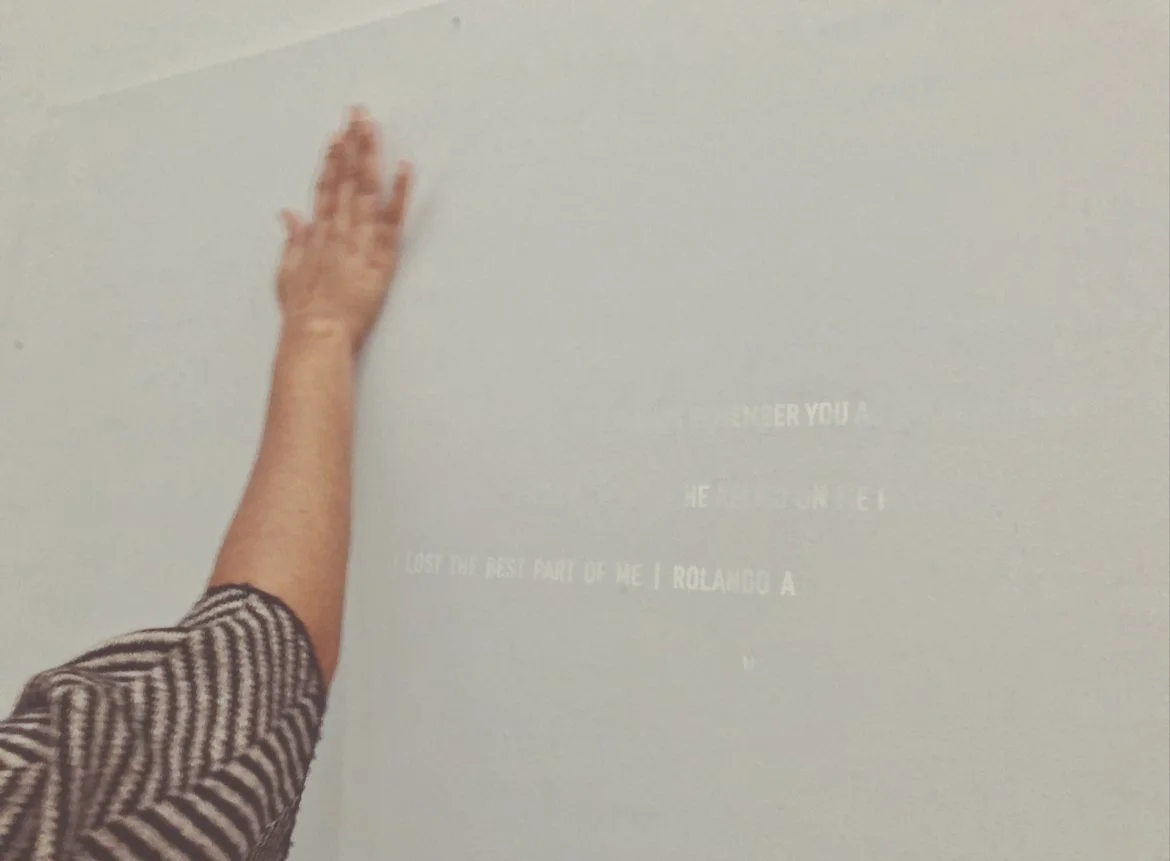
Painted in heat-sensitive paint, their names, and a single phrase of memory shared by their loved ones, were invisible at room temperature.
Like so many, all one hundred would have died without being touched.
It seemed particularly moving, then, that it was the warmth of human touch that would make them visible.
Once the names cooled, they faded to invisibility once more.
Trace: A Memorial was first exhibited in 2021 [ MIRIAM & IRA D WALLACH ART GALLERY (NYC)] as a response to the first year of the pandemic and lockdowns.
“While so many sheltered indoors, these people, anonymized in public discourse as “essential workers”, did not have that option. Their precarity and lack of agency were narrativized as heroism. This elided the long history of inequality that rendered the ‘essential’ differently vulnerable.
Exposed yet unseen.”
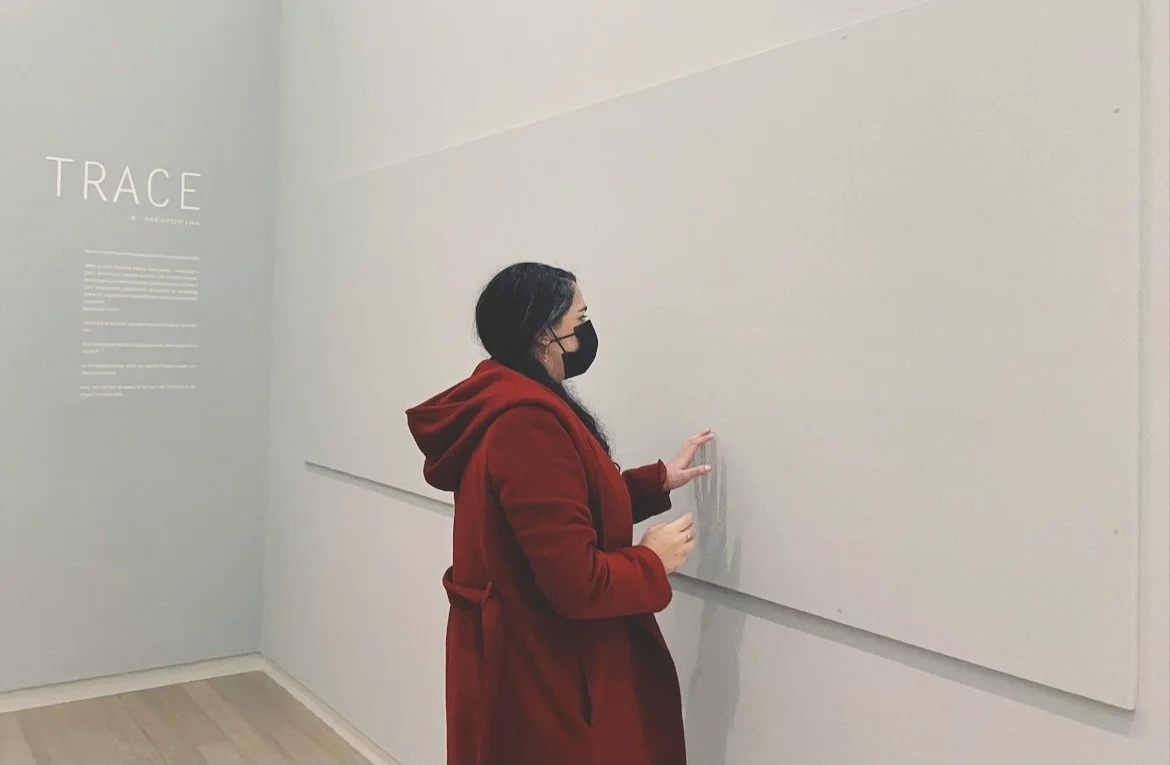
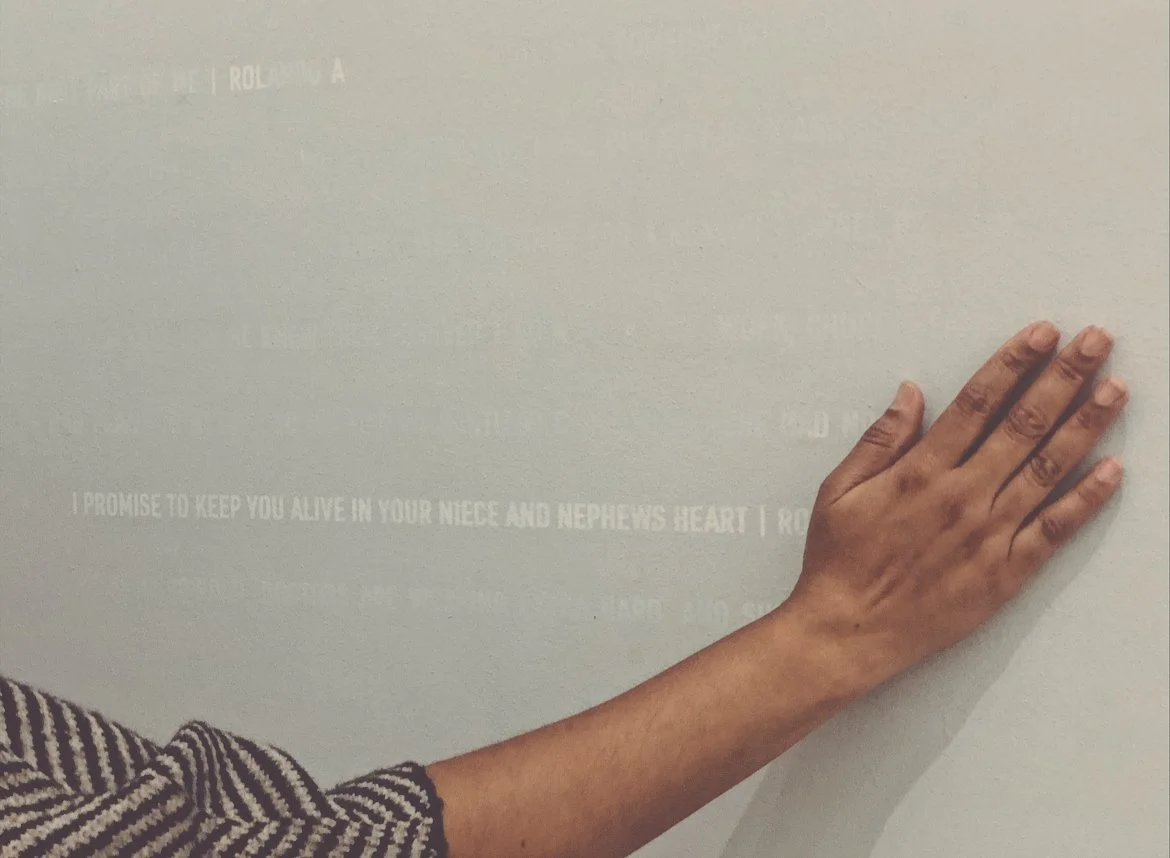
A Monument to Essential Workers
Trace is a permanent, participatory monument located at the CUNY Graduate School of Public Health & Health Policy (CUNY SPH).
Commissioned collaboration with the Harlem Health Initiative (HHI) and the NYC Preparedness and Recovery Institute (PRI), the work serves as a civic landmark and a space for collective remembering.
It is a memorial to one hundred Black and Brown essential workers lost in the early months of 2020 to COVID-19.
The Intention
Trace: A Memorial is, at its core, an invitation to embodied connection.
In those early months of 2020, touch was an intimacy denied to everyone, but most painfully to the dying. We lost many Black and brown people who the city deemed "essential." Their labor made it possible for many of us to shelter indoors, but they had no such luxury. They had to keep working. The safety of some depended on the ongoing precarity of others. We were all vulnerable during that time, but we were differently vulnerable.
This memorial is also conscious of its time, post-the 2021 George Floyd protests when hurt and dying Black bodies were relentlessly on display, this work denies the viewer the Black and Brown body itself. There are no images in this memorial. There is nothing to photograph. Anything you take from this experience, you will carry in your body.
The memorial asks something of you. The names of the lost, and the memories offered by the people who loved them, are written on the wall in heat-sensitive paint. At room temperature, they remain invisible. If you want to know them, you cannot be a passive voyeur. You have to lay your hands on the wall. You must implicate your own body, and let body heat solicit permission to commune with them.
And what you see then is not a sociology lesson. Not a statistic. You see interior lives. You see what the people who loved them needed to say.
“She would give us her food.”
“He studied hard to become a US citizen.”
“He was the soul.”
“Fashionista. She was on her way.’”
The small, magnificent things that make up a lifeworld. The unnamable, and to some, illegible griefs. Memories in media res.
I wanted the visitor to feel the undeniable connection between their own living, breathing body and the worker's body upon whose precarity their lives depend. The tragedy isn't simply the virus. The tragedy is a system that manufactured this differential vulnerability to that loss in the first place, and manufactures it still.
The Launch: A Vision Realized
It was raining on the day of the launch, May 28th, 2025. The kind of relentless, pouring rain that gives you every excuse to stay inside. But they came anyway. Over a hundred people pressed into that space at the CUNY School of Public Health in Harlem.
Represented there was the architecture of community that had kept New York City safe. It was the whole village. You had the university researchers standing shoulder-to-shoulder with the neighborhood folks; elected officials standing next to the people they represent. It was a magnificent cross-section of generations, cultures, and professions, all breathing together in one room.
We didn't just gather to look at art. We‘d gathered to do the vital work of gratitude. To honor the people who actually held the sky up for Harlem when it was falling—people like Dominick Boyce, Deneane Brown-Blackmon, and Dr. Cheryl Smith. The city officials lauded them with proclamations and formal recognition of all that they had done for Harlem. Yet, the true honoring was the collective witness of the room. All were there to say to the people who sustained us: We see your labor. We see your grief. We thank you.
The incredible team at CUNY SPH had curated the space for deep care, providing a place where these “doers” could finally exhale and acknowledge how the pandemic had personally impacted them. We walked in and were immediately met with the smell of Caribbean food, cooked by a lifelong Harlem resident. It smelled like home. It grounded us. We had little tissue packets waiting that simply said, Just Breathe. And when I spoke to the room, the room answered: “Àṣẹ.” You heard that beautiful, ancestral habit of call and response—the murmurs of agreement, the energetic exclamations, the deep, silent nods. They weren't just an audience; they were participating in the ritual of communal remembrance.
Then something magnificent happened—something we couldn't have possibly planned.
The collective body heat of all those people, all that life and breath gathered together to mourn and to celebrate, began to change the actual climate of the room. Before anyone even had the chance to step forward and lay a hand on the wall of the monument, the memories began to surface.
The ambient warmth of the community summoned every single name at once. All the phrases, all the loves, bloomed into visibility at the exact same time. We didn't even have to touch the wall to bring them into the light. Our shared presence called them into our company.
Ongoing Engagement
The incredible team at CUNY School of Public Health knew that this space of reflection and remembrance, which they envisioned on the ground floor, needed a scaffolding of care to sustain it.
That is the necessary work of the Tracking Resilience and Community Engagement project, which seeks to further the artwork's message by providing permanent resources for those interacting with the piece and sharing its space.
The collaborative team at CUNY SPH designed a comprehensive Resource Guide for hosting events on the ground floor to acknowledge Trace and provide tools for varying degrees of ongoing engagement. The guide discusses the significance of the focus on essential workers, instructs visitors on how to interact with the artwork, and explores how to integrate Trace into future programming. Resources are also actively available to support grief and mental health, alongside specific support for undocumented immigrants who contribute to a significant portion of essential workers.
Awards & Honors
Civic Recognition and Impact
In acknowledgment of the memorial and for “outstanding achievements in oral history and the arts,” I received formal legislative commendations from the United States House of Representatives, the New York State Senate, the New York State Assembly, the New York City Council, and the New York Public Advocate's Office. To mark the impact of that gathering, the Office of the Manhattan Borough President officially declared May 28, 2025, ‘Nyssa Chow Appreciation Day’ in the borough of Manhattan.
I hold these recognitions with immense gratitude. It was a deeply humbling experience to stand in the company of the community leaders recognized that day. More than personal accolades, I view these honors as a public, civic promise: a shared commitment that the essential workers we lost will not be relegated to silence, but will remain deeply and permanently tethered to the living memory of the city.
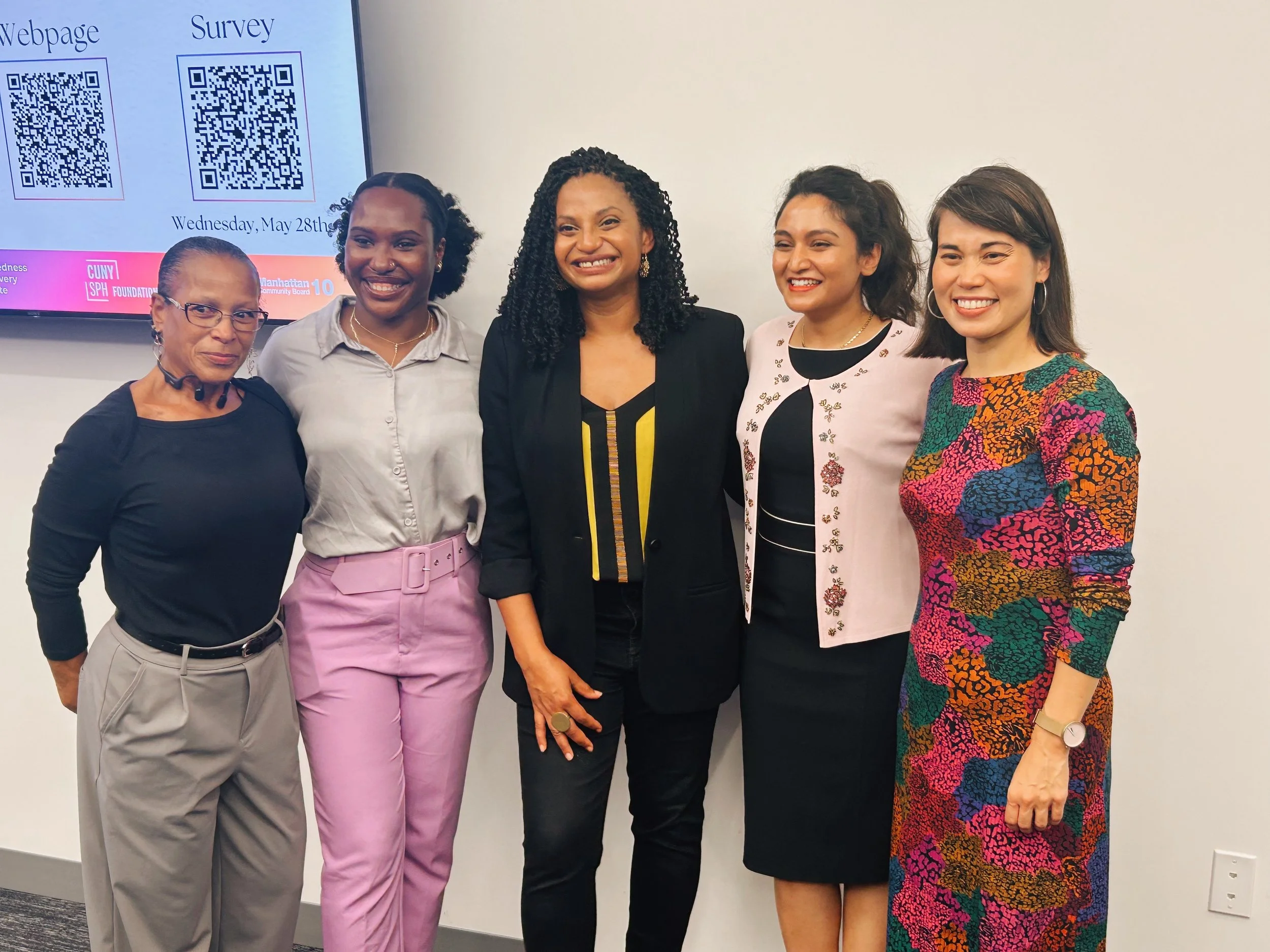
[Left to Right] Deborah Levine, Arielsela Holdbrook-Smith, Nyssa Chow, Prea Khan, Dr. Emma Tsui
Acknowledgements
This memorial, and the sanctuary it has become for the wider community in Harlem and within public health, simply would not exist without the tireless efforts and fierce vision of Deborah Levine, Arielsela Holdbrook-Smith, Prea Khan, and Dr. Emma Tsui.
My gratitude belongs to the Harlem Health Initiative for their thoughtful, protective partnership, alongside the New York City Preparedness and Recovery Institute, the CUNY SPH Foundation, and Manhattan Community Board 10.
A memorial must be kept alive by those who ensure it reaches the people who need it most. Profound thanks are owed to CUNY SPH faculty and students Ramla Sahib-Din and Araceli Campos for their vital and sustained labor in creating resource guides and sharing Trace with the broader community.
Thank you to master screen printer Leslie Diuguid for your artistry, and to art assistants Makaio Johnson, Naia Bautista, and Shannon Stovall for their dedicated precision.