Your Archives Cannot Preserve Us
Social Practice + Installation
Our ruin becomes our altar.
Your Archives Cannot Preserve Us is an intimate ritual of mourning and reclamation, and a rebuke of the logic of colonial archives.
Why are our objects considered precious, but not our worlds?
In Western museums, our heritage is granted citizenship while our bodies are considered trespass. Colonial logic seeks to protect, house, and preserve indigenous and postcolonial artifacts, yet this "right to continued existence" is rarely extended to the people and lifeworlds who forged them.
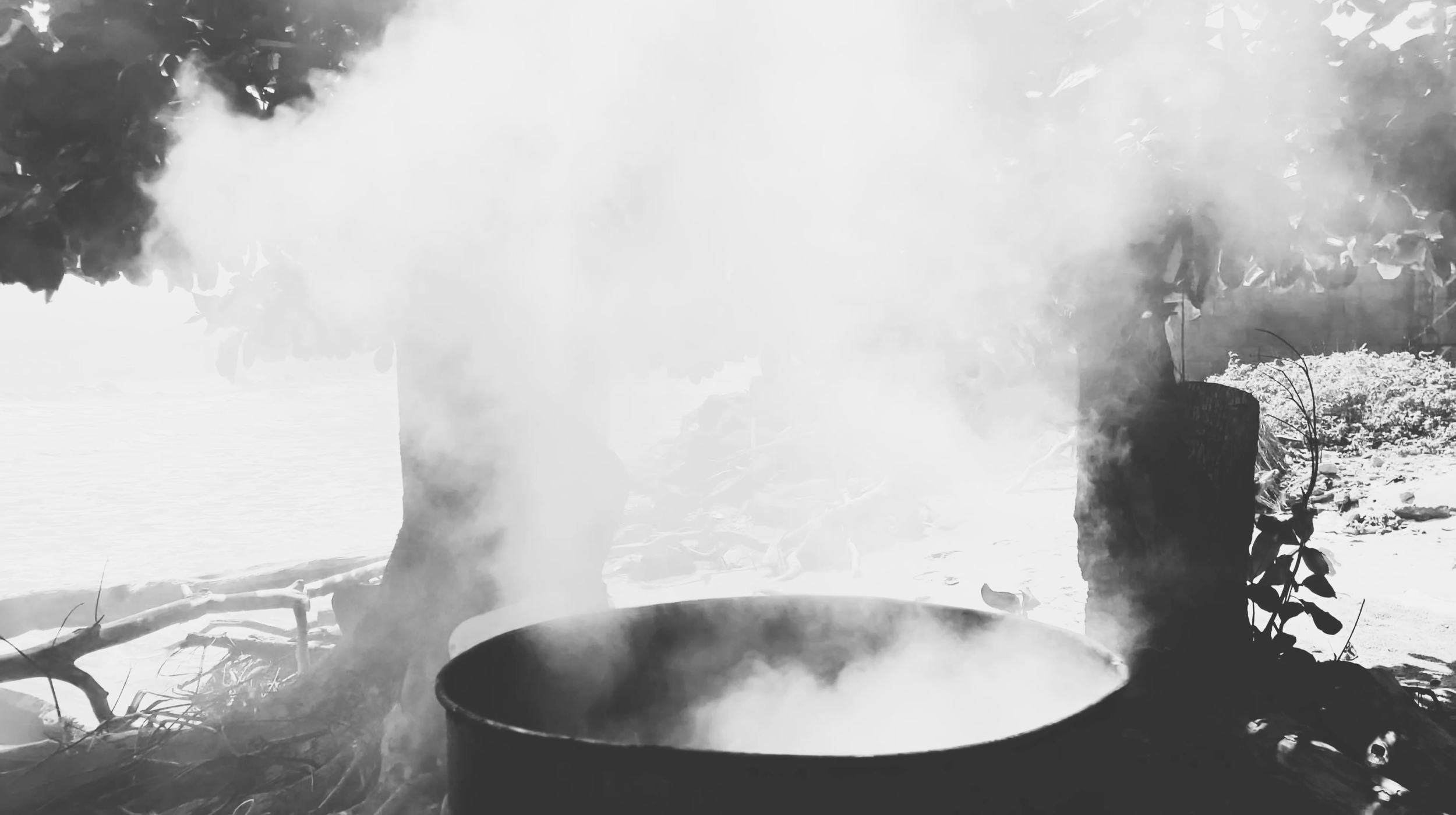
The work centers on the ritual burning of the ruins of my family home in Trinidad, turning to intimate, site-specific memory practices as a counter-logic to institutional preservation.
Your Archives Cannot Preserve Us (2024) was commissioned for Re-collections, an exhibition interrogating cultural extraction, Eurocentric archaeology, and the biases of traditional museology.
Commissioned for the exhibition Re-collections, The Latinx Project. Curated by Daniel Arturo Almeida, 20 Cooper Square Gallery, New York, NY
The Return
The Ritual Return
To assert that our lifeworlds—our ways of knowing ourselves, our communal belonging, and our shared earth—are precious, this work begins with an improvised ritual of return.
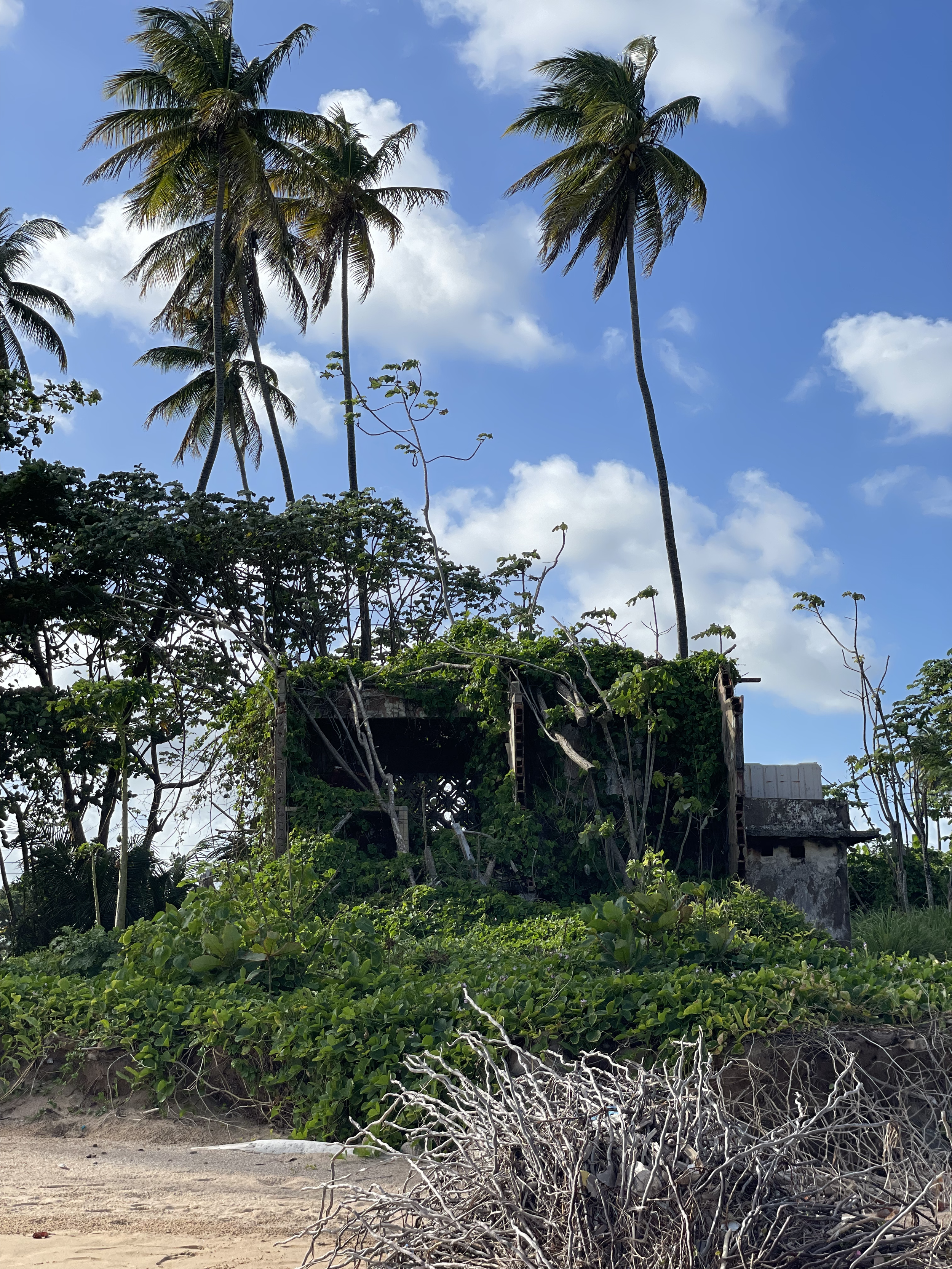
My mother, aunt, and I traveled back to the ruins of the house my grandfather built in Mayaro, a fishing village in Trinidad.
We had not returned in almost twenty years.
This house once held three generations of us; it was where the first generation of my family, who were allowed to own land in a former British colony, rehearsed a way of being in rhythm with the rough sea.
Today, that way of life has vanished.
We were scattered by a generation of global migrations and unmoored from the lifeworld by the compounding waves of national economic instability and the realities of crime. The loss of our home in this former colony was not an accident of time, but the direct casualty of surging geopolitical tides and environmental decay that manufactured our vulnerability.
It was an emotional, difficult, yet cathartic return.
The Ruin
Standing before the remains of our home, there was grief. This was the keep of our memories. Yet, beneath the sorrow, there was an awesome beauty in how the landscape had risen to reclaim it. The creeping vines had woven themselves through the living room. There was the constancy of the sea-waves, and all around, white lilies lay at its feet. It rested, surrendered to the wild of Mayaro, held entirely in the living archive of the land itself.
Reclamation
Together, we gathered things that felt like they still belonged to us on the land—things that held memories—and ritually burned them on the beach where we grew up.
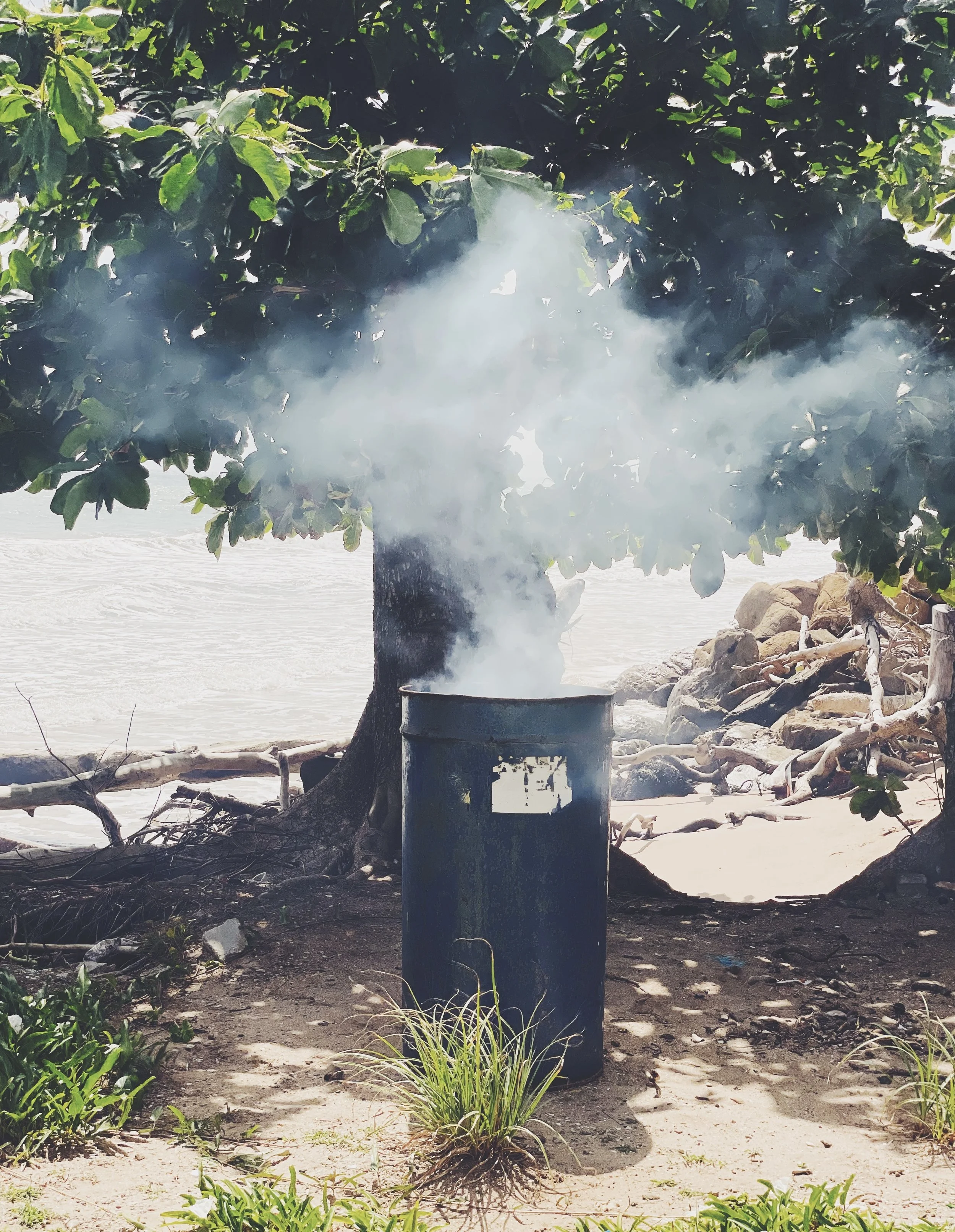
I offer this work to make visible the gentle improvisations we invent to preserve our lifeworlds; the quiet, gossamer work of shared remembrance that becomes our survivance and reclamation.
The rituals that tether us to co-belonging.
The rituals that connect us to what and who we have a duty to remember.
The rituals that precious us.
Your archives cannot preserve this.
“
”
Gathering Ashes
The Remains
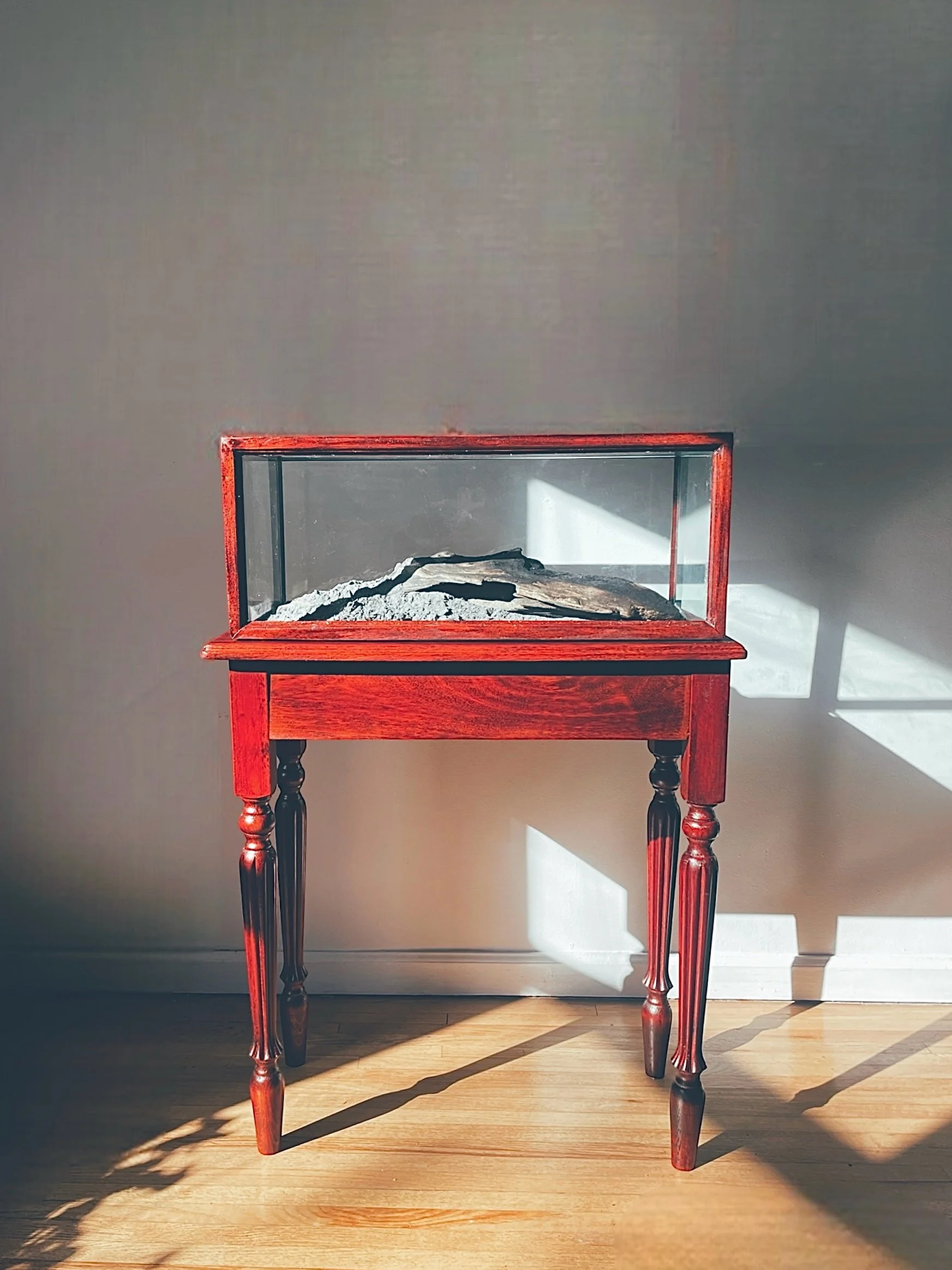
After the burning, I gathered the ashes. This is what I brought back to the USA to be displayed in the gallery.
The resulting ashes and partially burned driftwood (memories of makeshift sand shovels and cricket bats for our childhood games) were enshrined in a British Victorian museum vitrine
The colonial archive holds our ruin; an intimacy of preservation and plunder.
But the archive is not silent. Hidden within the sculpture was a resonant speaker playing the field recordings from the ritual burning: the crackling of the ritual fire and the crashing of the Mayaro sea.
While the audio is only a subtle whisper when standing nearby, placing a hand against the glass case reveals a low, tactile rumbling.
The deep frequencies tremble the ash within.
It is gently alive. It is landscape.
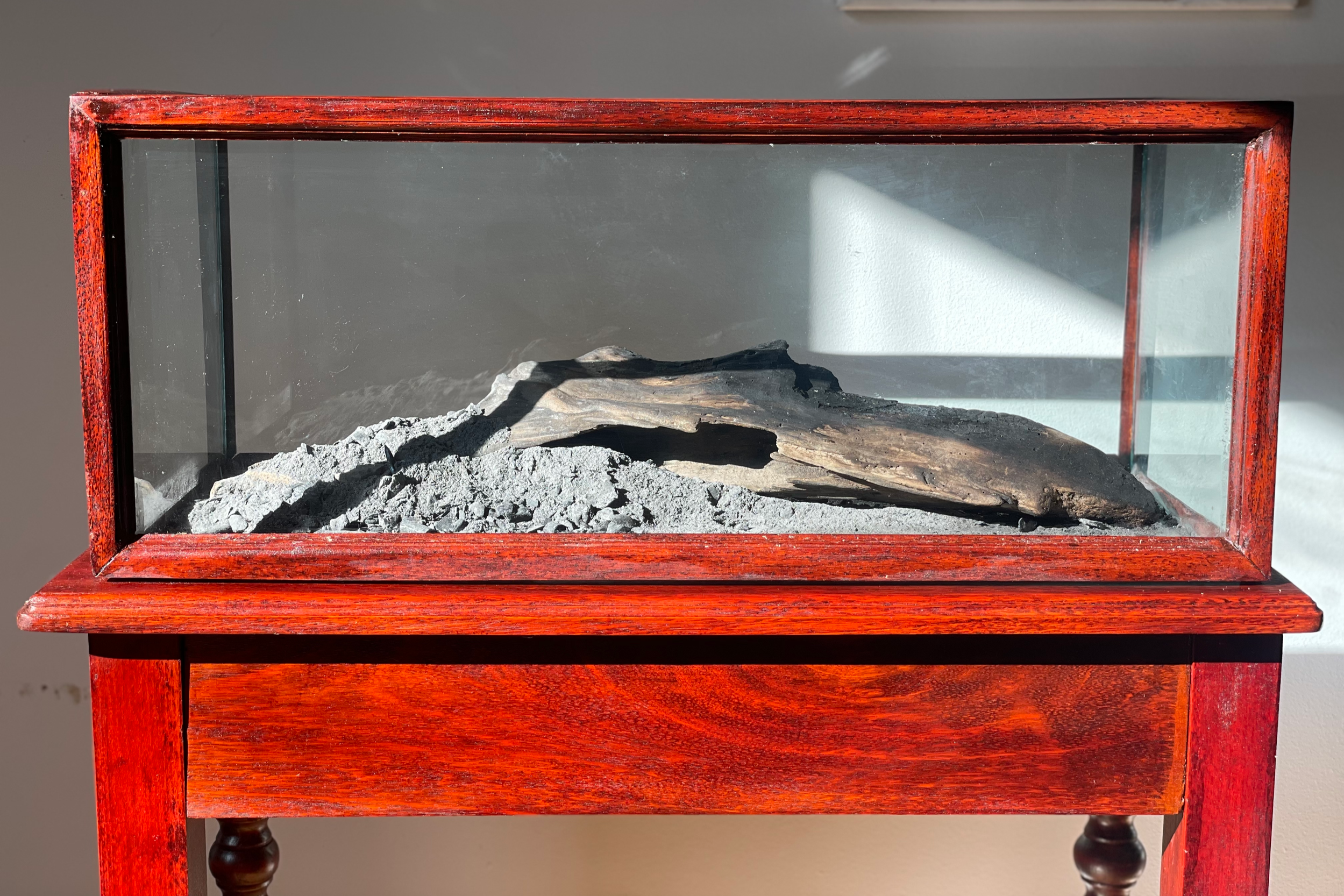
Your Archives Cannot Preserve Us (2024) was commissioned for Re-collections, an exhibition interrogating cultural extraction, Eurocentric archaeology, and the biases of traditional museology.
Exhibition: Re-collections, The Latinx Project.
Curated by Daniel Arturo Almeida,
20 Cooper Square Gallery, New York, NY